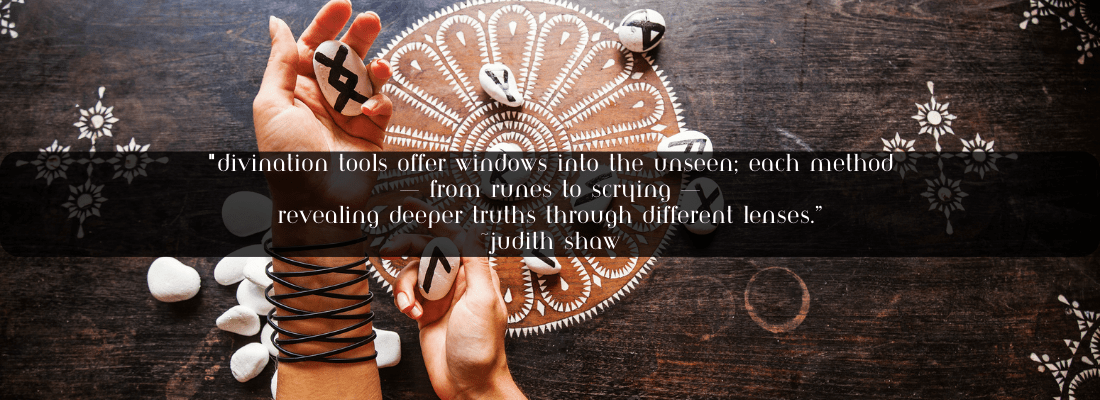
Divination tools – Exploring Runes, Scrying, Pendulums, and more!
While tarot cards are perhaps the most well-known tool for divination, there are numerous other methods that offer unique insights and connections to the spiritual realm. Exploring these diverse divination tools can deepen your practice and provide different perspectives on the questions you seek to answer. Here, we delve into the magical world of runes, scrying, and other fascinating divinatory practices.
We’ll start with the most world known:
Astrology
Astrology involves studying the positions and movements of celestial bodies to understand and predict human affairs and natural phenomena.
- Natal Charts: Your natal chart, or birth chart, maps the positions of the planets at the time of your birth and provides insights into your personality and life path.
- Horoscopes: Daily, weekly, or monthly horoscopes offer guidance based on the current positions of the planets.
- Astrological Events: Eclipses, retrogrades, and planetary transits can significantly impact your energy and the outcomes of your actions.
Runes
Runes are an ancient alphabet used by Germanic tribes for writing, divination, and magical purposes. Each rune carries specific meanings and energies, making them powerful tools for gaining insight.
- Elder Futhark: The most commonly used runic alphabet consists of 24 symbols, each representing a different concept or force.
- Casting Runes: To use runes for divination, you can cast them onto a cloth and interpret the symbols that appear, or draw them from a bag and lay them out in spreads similar to tarot cards.
- Rune Meanings: Understanding each rune’s significance is crucial. For example, Fehu represents wealth and prosperity, while Algiz symbolizes protection and defense.
Scrying
Scrying involves gazing into a reflective surface to receive visions and messages from the subconscious or spiritual realms.
- Crystal Balls: The classic scrying tool, crystal balls, can be used by focusing on the inner reflections until images or symbols emerge.
- Mirrors: A black mirror or a dark bowl of water can serve as a scrying surface. The dark background helps reduce distractions and aids in visualizing.
- Techniques: Relax your mind and gaze softly into the reflective surface. Allow your mind to enter a meditative state and be open to any images, symbols, or feelings that arise.
Pendulums
Pendulums are simple yet powerful tools for divination and dowsing.
- Choosing a Pendulum: Select a pendulum made from a material that resonates with you, such as a crystal, metal, or wood.
- Yes/No Questions: Pendulums are particularly effective for yes/no questions. Establish a baseline by asking the pendulum to show you a “yes” and a “no” movement.
- Dowsing: Use pendulums to locate objects, energy centers, or answers to more complex questions by interpreting the direction and strength of its swings.
Tea Leaf Reading
Tea leaf reading, or tasseography/tasseomancy, involves interpreting patterns made by tea leaves left in a cup.
- Preparation: Brew loose tea and drink it, leaving a small amount of liquid and the leaves at the bottom of the cup.
- Interpreting Shapes: Swirl the cup and then observe the shapes formed by the leaves. Each shape can symbolize different things, and your intuition plays a key role in the interpretation.
- Common Symbols: A heart might symbolize love or relationships, while a bird could represent a message or travel.
Bibliomancy
Bibliomancy is the practice of seeking spiritual insight by reading passages from books, often sacred texts.
- Choosing a Book: Use a book that holds personal or spiritual significance for you.
- Method: Ask a question, then randomly open the book and read the first passage that catches your eye. Interpret the message in the context of your question.
Bones:
Bone divination, or osteomancy, is an ancient practice that involves reading the shapes, positions, and patterns of bones to gain insight and foretell the future.
- Types of Bones: Commonly used bones include animal bones, such as those from chickens or other small animals, though any type of bone can be used based on tradition and personal preference.
- Casting Bones: Bones are often cast onto a cloth or into a circle, and their positions relative to each other and any symbols marked on the casting surface are interpreted.
- Reading the Bones: The shape, condition, and placement of the bones provide clues. For instance, crossed bones might indicate conflict or barriers, while bones pointing outward could suggest movement or travel.
This is just the tip of the iceberg when it comes to exploring the vast and varied world of divination tools beyond tarot. Each method offers its own unique insights and connections to the spiritual realm. By studying these diverse practices, you can deepen your spiritual journey, gain fresh perspectives, and discover the rich tapestry of wisdom that each divination tool provides. The possibilities for growth and understanding are endless, and this exploration is only the beginning.
Exploring these divination tools can expand your spiritual practice and offer new ways to connect with your intuition and the unseen world. Each method has its own unique strengths and can provide valuable insights into different aspects of your life. Experiment with these tools to discover which resonates most with you and enhances your journey of self-discovery and spiritual growth.

 Unleash Your Inner Witch